

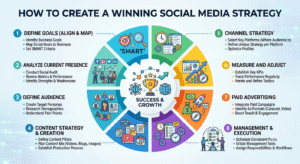
In today’s digital world, having a strong social media presence is essential for building brand awareness, connecting with customers, and growing your business. However, simply posting content is not enough. A successful brand needs a well-planned social media strategy that delivers the right message to the right audience at the right time.
A winning social media strategy helps businesses increase engagement, generate leads, improve customer relationships, and achieve marketing goals.
1. Define Your Social Media Goals
The first step in creating an effective social media strategy is setting clear goals. Your goals should align with your overall business objectives.
Examples of social media goals include:
- Increasing brand awareness
- Driving website traffic
- Generating new leads
- Improving customer engagement
- Increasing sales and conversions
- Building a loyal online community
Using the SMART goal framework (Specific, Measurable, Achievable, Relevant, and Time-bound) can help you create realistic and trackable objectives.
2. Understand Your Target Audience
Knowing your audience is the foundation of successful social media marketing. Research your customers’:
- Age and location
- Interests and preferences
- Online behavior
- Challenges and needs
- Favorite social media platforms
Understanding your audience allows you to create content that connects with them and encourages interaction.
3. Choose the Right Social Media Platforms
Not every platform is suitable for every business. Focus on platforms where your target audience spends the most time.
Popular platforms include:
- Instagram: Best for visual content, brands, and influencers
- Facebook: Useful for communities, advertising, and customer engagement
- LinkedIn: Ideal for professional networking and B2B marketing
- TikTok: Great for short-form videos and reaching younger audiences
- X (Twitter): Effective for real-time updates and conversations
Choosing the right platforms helps you use your time and resources effectively.
4. Create Valuable and Engaging Content
Content is the heart of social media success. A strong content strategy should include a mix of different content types:
- Educational posts
- Behind-the-scenes content
- Customer testimonials
- Videos and reels
- Infographics
- Industry updates
- Polls and interactive posts
Your content should educate, entertain, or inspire your audience.
5. Develop a Social Media Content Calendar
A content calendar helps you organize your posts and maintain consistency.
A good content calendar includes:
- Posting schedule
- Content topics
- Captions
- Visual ideas
- Campaign dates
- Important events
Consistency builds trust and keeps your audience engaged.
6. Focus on Engagement
Social media is about building relationships, not just broadcasting messages.
To increase engagement:
- Reply to comments and messages
- Ask questions
- Encourage discussions
- Share user-generated content
- Participate in relevant conversations
Active engagement helps create a strong connection between your brand and your audience.
7. Use Analytics to Measure Performance
Tracking results helps you understand what works and what needs improvement.
Important metrics include:
- Engagement rate
- Followers growth
- Website clicks
- Reach and impressions
- Conversion rate
- Customer feedback
Analyzing performance data allows you to optimize your strategy for better results.
8. Use Social Media Tools and Automation
Managing multiple platforms can be challenging. Social media management tools can help you schedule posts, monitor performance, and save time.
Useful tools include:
- Content scheduling platforms
- Analytics tools
- Design tools
- Social listening tools
Automation allows marketers to maintain consistency while focusing on strategy and creativity.
9. Stay Updated With Trends
Social media trends change quickly. Successful brands adapt to new features, algorithms, and audience preferences.
Keep an eye on:
- Short-form video trends
- AI-powered marketing tools
- New platform features
- Influencer collaborations
- Changing customer behaviors
Being adaptable helps your brand stay competitive.
10. Continuously Improve Your Strategy
A winning social media strategy is not a one-time project. Regularly review your results, test new ideas, and improve your approach.
Experiment with:
- Different content formats
- Posting times
- Hashtag strategies
- Advertising campaigns
- Audience targeting methods
Continuous improvement leads to long-term social media success.
Conclusion
Creating a winning social media strategy requires planning, creativity, consistency, and data-driven decisions. By understanding your audience, creating valuable content, engaging with followers, and analyzing results, your business can build a powerful online presence.
Social media success does not happen overnight, but with the right strategy, businesses can create meaningful connections and achieve sustainable growth.
#SocialMediaStrategy #SocialMediaMarketing #DigitalMarketing #ContentMarketing #SocialMediaManagement #MarketingStrategy #BrandGrowth #OnlineMarketing #SocialMediaTips #BusinessGrowth #ContentCreation #InstagramMarketing #FacebookMarketing #LinkedInMarketing #SocialMediaSuccess #MarketingTips #DigitalStrategy #SmallBusinessMarketing #BrandAwareness #SocialMediaGrowth #Entrepreneurship #OnlineBusiness #MarketingTrends #CustomerEngagement #SocialMediaGoals